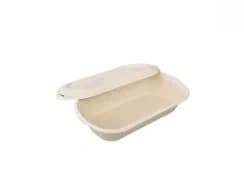
750 ml Bagasse Lunch Box with Lid
1201
- Weiß
- Ungebleicht
Rohstoffe
Eigenschaften
Der Kreislauf der Natur
Sugarcane Bagasse
1sugarcane is harvested
2sugar is extracted in factory. leftover fiber is bagasse.
3bagasse is processed into pulpboard.
4pulpboard molded into tableware.
5products are composted after use.
6compost is turned into nutrient rich soil.
750 ml Bagasse Lunch Box with Lid 1201 | 230.5 x 132.5 x 40 mm |
| 500 PCS / CTN | 50,000 |
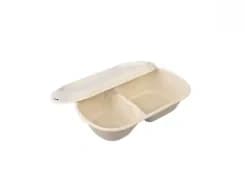 750 ml 2-Compartment Bagasse Lunch Box with Lid 1202 | 230.5 x 132.5 x 40 mm |
| 500 PCS / CTN | 50,000 |
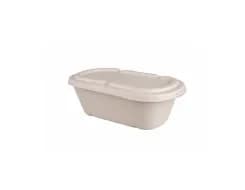 1000 ml Bagasse Lunch Box with Lid 1203 | 220 x 125.5 x 70 mm |
| 500 PCS / CTN | 50,000 |
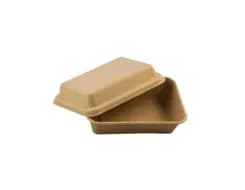 1000 ml Bagasse Box with Lid 1205 | 190 × 139 × 46 mm |
| 500 PCS / CTN | 50,000 |
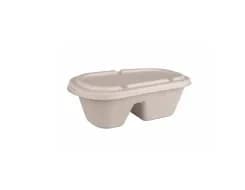 1000 ml 2-Compartment Bagasse Lunch Box with Lid 1204 | 225 x 132.5 x 15 mm |
| 500 PCS / CTN | 50,000 |
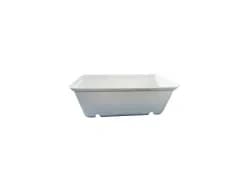 650 ml Bagasse Box with Lid 1212 | 179 x 118 x 58 mm |
| 800 PCS / CTN | 50,000 |
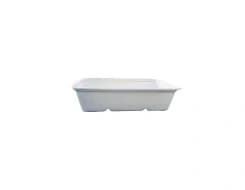 500 ml Bagasse Box with Lid 1211 | 179 x 118 x 44.4 mm |
| 800 PCS / CTN | 50,000 |
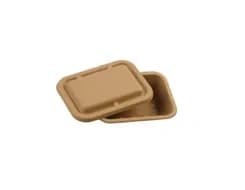 400 ml Bagasse Box with Lid 1206 | 172 × 119 × 40 mm |
| 800 PCS / CTN | 50,000 |
Sugarcane is a tree-free, rapidly renewable resource. Sugarcane bagasse, the plant fiber we used for manufacture is the by-product of the sugar refining industry. We make the waste fiber useful again by making it into eco-friendly tableware/food packaging products. Our bagasse products are BPI & OK COMPOST certified compostable. Sugarcane bagasse products are certified Home compostable. Given the right conditions, it can be composted into the water, carbon dioxide, and toxic-free biomass within 90 days.
Learn More >>